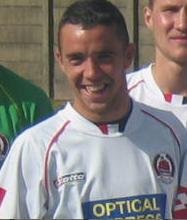
Dougie Imrie's Greenock Morton Tenure: A Masterclass in Stabilisation and Success
The world of football management is often a volatile one, particularly in the Scottish Championship, where resources are tight and competition is fierce. Yet, amidst this challenging landscape, certain figures emerge who not only defy expectations but fundamentally reshape the trajectory of a club. Dougie Imrie is undoubtedly one such figure, whose tenure at Greenock Morton Football Club stands as a compelling testament to shrewd management, tactical nous, and an unwavering commitment to progress.
From the moment he stepped into his first senior managerial role, Imrie faced a formidable task: lifting a club languishing at the bottom of the league. What followed was a remarkable journey from the brink of relegation to consistent challengers, culminating in a respectful departure to take the reins at Raith Rovers. This article delves into the phases of Imrie's transformative time at Cappielow, examining how he steered the 'Ton' from mere survival to genuine success.
The Baptism of Fire: Stepping into the Deep End
When Dougie Imrie arrived at Greenock Morton, the club was in a perilous position, propping up the Scottish Championship table. It was a daunting scenario for any manager, let alone one taking on his very first senior role in the dugout. Imrie, a seasoned professional player with a reputation for tenacity and an uncompromising work ethic, was no stranger to pressure, but this was a different beast altogether. His playing career, which saw him feature for clubs like Clyde, Inverness Caledonian Thistle, St Mirren, Greenock Morton (as a player himself), and Hamilton Academical, honed a deep understanding of the Scottish game. This journey from the pitch to the technical area is a fascinating one, detailed further in From Player to Manager: The Football Journey of Dougie Imrie.
His initial focus was clear: stabilisation. This meant tightening up a leaky defence, instilling a fighting spirit, and making Morton incredibly difficult to beat. Imrie's approach was pragmatic; he understood the importance of securing points, even if it meant sacrificing expansive football in the short term. He drew upon his own experiences as a tough-tackling winger and forward, imbuing his squad with his personal brand of resilience. This period was characterised by a series of crucial draws and hard-fought victories that slowly but surely nudged Morton away from the foot of the table. It required clear communication, setting achievable targets, and fostering a belief that survival was not just possible, but inevitable.
Practical Tip for Aspiring Managers: When taking over a struggling side, focus on foundational elements first. Prioritise defensive solidity, player morale, and creating a strong team identity. Wins will follow from resilience and organisation.
Forging a New Identity: From Survival to Contention
With the immediate threat of relegation averted, Dougie Imrie began the second phase of his project: transforming Morton into a competitive Championship outfit. This wasn't merely about avoiding the drop; it was about establishing the club as a consistent presence in the mid-to-upper echelons of the league. His tenure brought "solid league finishes," a phrase that, for a club like Greenock Morton, signifies remarkable progress.
Under Imrie, Morton became renowned for their disciplined approach, tactical flexibility, and an uncanny ability to punch above their weight. While they might not have always dominated possession, they were incredibly effective in their transitions and set-pieces, often frustrating more fancied opponents. This period saw the team mature, with players understanding their roles explicitly and executing game plans with precision. The progression was tangible, leading to "near misses in the promotion play-offs," an indication of how close Imrie brought the club to the Premiership dream. Success, in this context, isn't solely defined by trophies but by consistent over-performance relative to resources and the building of a sustainable, competitive model.
Insight: For smaller clubs, consistent mid-table finishes and challenging for play-off spots represent significant success. It builds fan engagement, attracts better talent, and creates financial stability, laying a crucial foundation for future growth.
Memorable Moments and Cup Glory Under the Lights
Beyond the league standings, Dougie Imrie also delivered moments of pure exhilaration for the Greenock Morton faithful, particularly in cup competitions. These "memorable cup performances" provided crucial breaks from the league grind and offered the chance for giant-killing heroics. The club statement specifically highlights the "unforgettable victory over Motherwell under the Cappielow lights." Such nights are etched into the history of a club, creating lasting memories for supporters and showcasing the team's ability to compete with top-flight opposition.
Cup runs are vital for Championship clubs. They not only provide a significant financial boost through gate receipts and prize money but also foster a strong sense of belief and team unity. For players, it's an opportunity to test themselves against higher-calibre opponents and gain valuable experience. For fans, it's the thrill of the unexpected, the romance of the cup, and a chance to dream big. These performances under Imrie were not flukes but rather a reflection of the disciplined and organised approach he instilled.
Fact: Cup victories, especially against higher-league opposition, can have a profound psychological impact, boosting confidence throughout the squad and galvanising the fanbase.
The Inevitable Departure: A Respectful Farewell
Given the consistent progress and solid foundations laid by Dougie Imrie, it was perhaps inevitable that his success would attract attention from elsewhere. Greenock Morton FC confirmed his departure to take up the vacant managerial position at Raith Rovers, marking the end of a transformative era. The club statement details a respectful and transparent process: Raith Rovers formally approached Morton, Imrie expressed a desire to explore the opportunity, and Morton, true to their word, granted permission for discussions.
Crucially, Morton had "consistently maintained that we would not stand in Dougie’s way," an approach consistent with their stance during previous summer interest from Partick Thistle. While the club expressed understandable disappointment, they also conveyed deep respect for Imrie's decision. An agreement was reached between the clubs, and personal terms with Raith Rovers were concluded, facilitating a smooth transition. This handling of a manager's departure is a testament to the professionalism of Greenock Morton, understanding that in modern football, success often means attracting interest from clubs perceived to be larger or offering a different challenge.
For more details on his move, you can read Dougie Imrie Departs Morton for Raith Rovers Managerial Role.
Insight: The respectful handling of a manager's departure, especially a successful one, reflects well on a club's professionalism and can ensure a positive relationship moving forward, potentially attracting future talent.
Legacy and Future: What Dougie Imrie Leaves Behind
Dougie Imrie's legacy at Greenock Morton is substantial. He arrived at a time of crisis and not only stabilised the ship but propelled it towards sustained success. His "hard work, commitment, and contribution" fundamentally altered the club's trajectory in the Scottish Championship. He leaves behind a team that is not afraid to compete, a squad with a strong identity, and a fanbase that remembers memorable nights and genuine progress.
The club now enters a new phase, with Technical Head Coach Billy Davies assuming interim charge as internal discussions commence for the next steps. Morton's call to supporters to continue their "outstanding backing of the team" highlights the importance of continuity and unity in the wake of such a significant departure. For Imrie, the move to Raith Rovers represents a fresh challenge, an opportunity to replicate and build upon his managerial achievements in a new environment, undoubtedly with ambitions of pushing for the top end of the Championship and beyond.
In conclusion, Dougie Imrie's time at Greenock Morton was a masterclass in managerial acumen. He took a club on its knees, instilled belief and organisation, and guided them to a position of strength, laying a robust foundation for future endeavours. His journey from player to respected manager, marked by stabilisation and success, will be fondly remembered by the 'Ton' faithful and serves as a blueprint for aspiring managers navigating the demanding world of professional football.